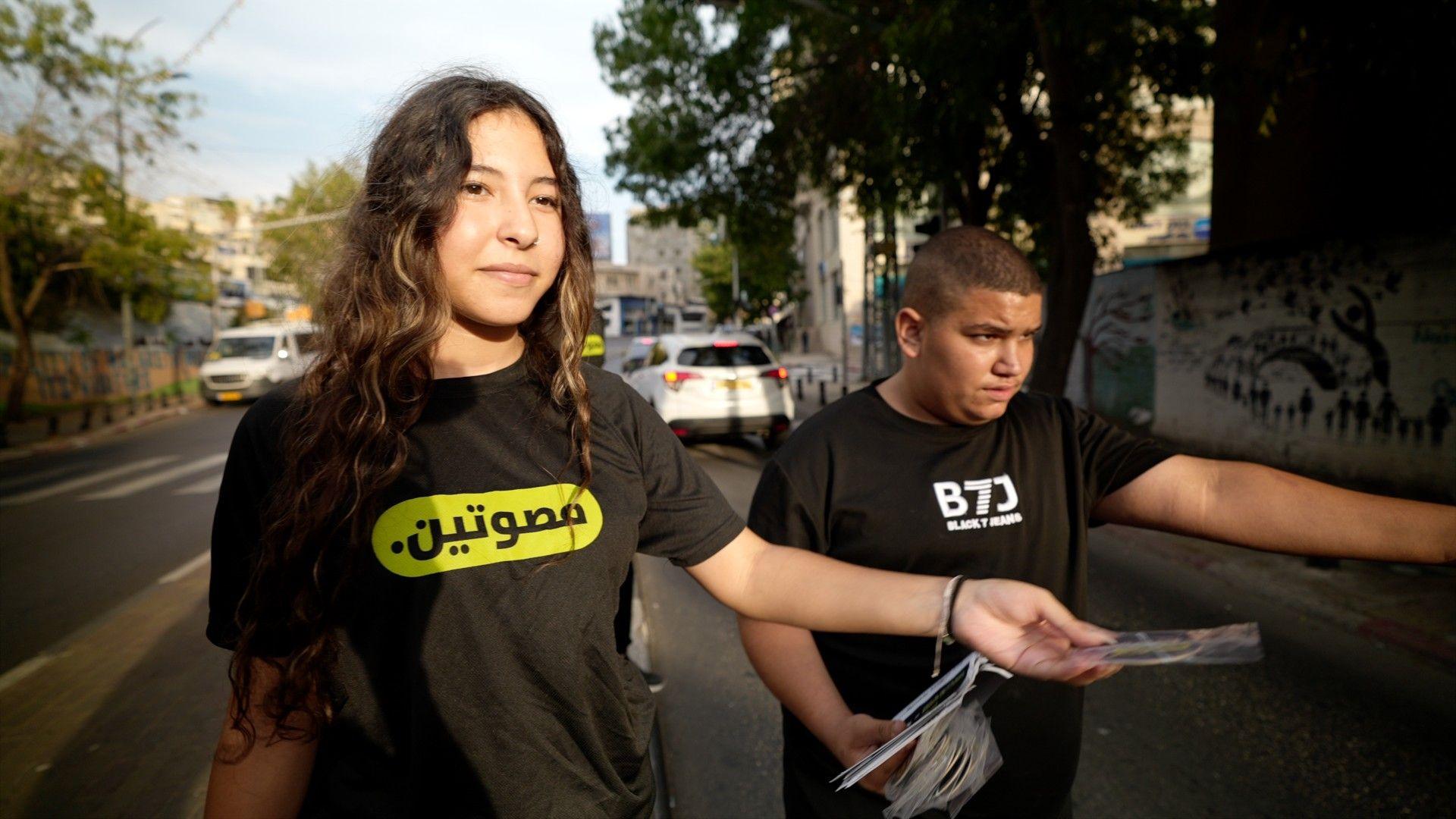
Students in Nazareth are handing out leaflets urging Arab Israelis to vote in next week's general election, according to the BBC. Polls indicate that Arab parties could hold a critical balance of power.
Arab Israelis make up about a fifth of the population. Disaffection has often driven down their turnout in past elections. This year, however, there is a strong push to remove the current government, described as the most right-wing coalition in the country's history. It is an alliance between Prime Minister Benjamin Netanyahu and far-right and ultra-Orthodox parties.
Arkan Badran, 23, one of the students distributing flyers, says: "I see it as our duty to bring down this extremist government. They treat us as second-class." He urges young people to vote for Arab lists.
Most opinion polls suggest that neither Netanyahu's bloc nor the main "Change Bloc", led by centre-right former military chief Gadi Eisenkot, has a clear path to a parliamentary majority. If that holds, anti-Netanyahu parties seeking a government would have to either break pledges not to work with the prime minister or make a deal with Arab-majority lists. Eisenkot has so far ruled out forming a government with Arab parties, citing a lack of shared values. All but one of the leading Jewish parties have also ruled out coalitions with Arab parties.
Suha Salman Mousa of the Mossawa Centre in Nazareth, an advocacy group for equal rights for Arab citizens, says Arab Israelis have been treated as enemies since the Hamas-led attack of 7 October 2023 and the war in Gaza that followed. She describes a narrowing of free speech, mass arrests, and firings over social media posts or opposition to the war. Salman Mousa accuses ministers of "systematic discrimination and incitement" against Arab Israelis. Civil society groups say budgets for Arab communities have been cut disproportionately. The government says the reductions are needed to fund wartime defence and security spending.
The BBC also reports politicised campaigns against Arab physicians working in Israeli hospitals and racially motivated attacks on Arab bus drivers by Jewish Israelis. Finance Minister Bezalel Smotrich has vowed to "Judaise" parts of the Galilee and Negev where most Arabs live.
Netanyahu's campaign has claimed his rivals plan to team up with Arabs to form a "dangerous government." It has placed billboards, including one at the main entrance to Nazareth, and used AI-generated videos showing his opponents embracing Arab leaders. Mohammed Magadli, a news anchor at Radio Nas and an analyst for Israel's Channel 12, says Netanyahu is trying to delegitimise Arab parties. Magadli calls the Change Bloc's refusal to work with Arab parties "racism," adding that Netanyahu's political interests drive it.
Polls this week suggest each of the two main blocs could win around 50 of the 120 seats in parliament, with 13 or 14 seats going to Arab-majority groupings. These are the Joint Arab List, a coalition of Hadash, Balad and Taal, and the smaller United Arab List, led by Mansour Abbas. Abbas, who served as a minister in a short-lived government in 2021, prioritises the problems of Arab Israelis and speaks relatively little about Palestinians in the West Bank and Gaza.