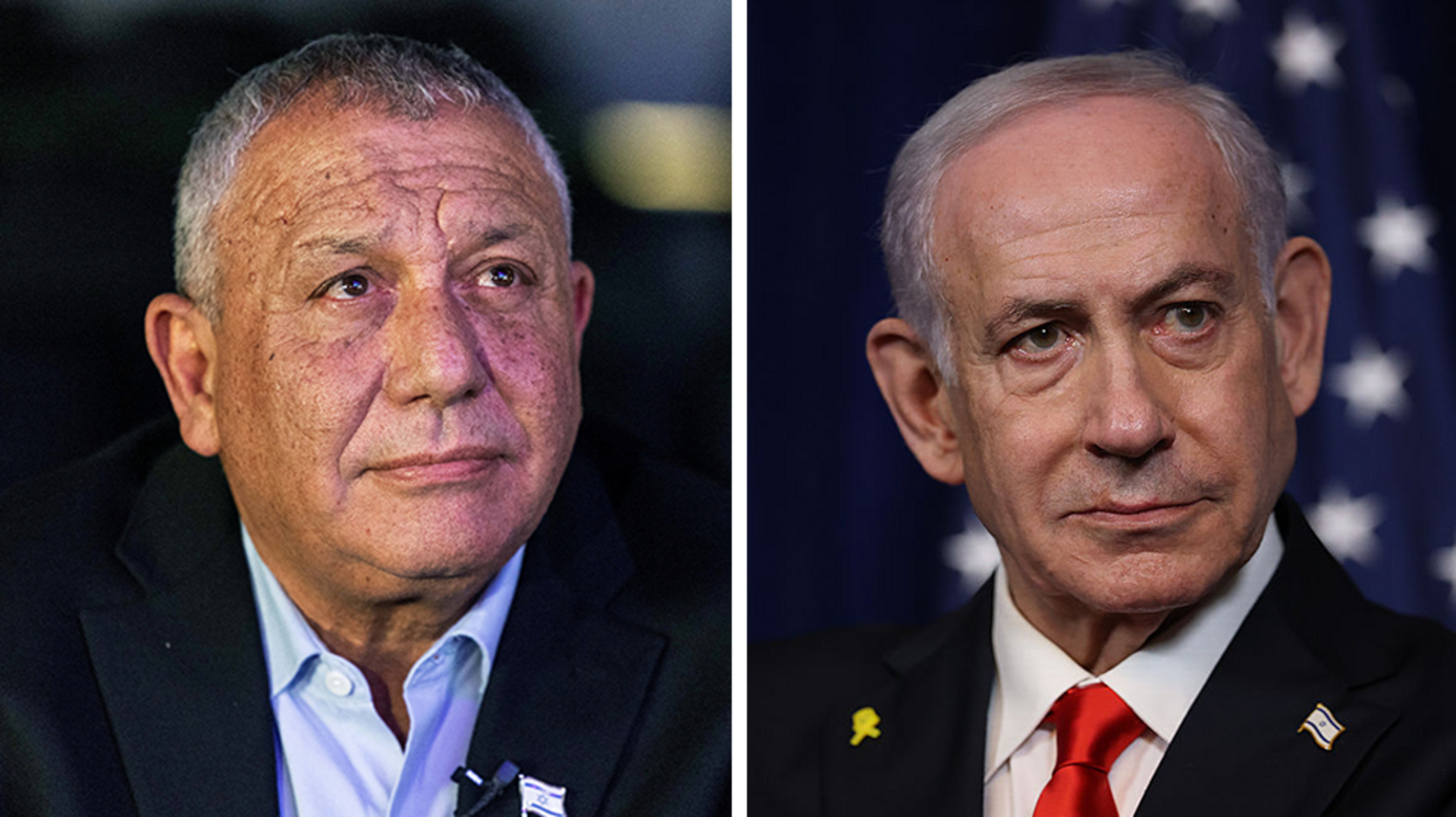
Israelis go to the polls on Tuesday in what many regard as one of the most consequential elections in the country's history. It is the first vote since the 7 October 2023 Hamas-led attacks, in which nearly 1,200 people were killed and 251 others were taken to Gaza as hostages, and since the wars that followed in Gaza, Iran, Lebanon, Syria and Yemen. Polling published on Friday shows incumbent Benjamin Netanyahu in a tight race with Gadi Eisenkot, a former head of the Israel Defense Forces.
Eisenkot's pitch rests on his military record and on accountability for the security failures that preceded 7 October. He lost a son in the first months of the Gaza war and resigned from Netanyahu's war cabinet in 2024 over the conduct of the conflict. Those credentials give him a serious claim to voters' trust. Yet the report makes clear that on Gaza he does not differ hugely from Netanyahu, having pledged to end Hamas rule within 18 months through a US-led plan or, if necessary, military means. Voters deserve to know what that pledge would mean for civilians still living under daily Israeli strikes and under the control of more than half the territory.
The West Bank may be where the stakes are most concrete. Netanyahu's camp largely wants to continue rapid settlement expansion, and the report notes that attacks by Jewish settlers are at an all-time high according to UN records. Eisenkot opposes the E1 project, which would in effect split the West Bank in two, and says he wants to crack down on extremist settlers. His talk of "autonomy or a state-minus" for Palestinians under ultimate Israeli security control, however, offers no path to the two-state solution that mainstream Israeli politicians once backed. Any coalition should be pressed to say plainly whether it accepts a Palestinian state, and if not, what it proposes instead.
The arithmetic is the other story. With 120 seats in the Knesset and a 61-seat threshold, neither bloc appears likely to reach a majority, and the report warns of weeks or months of wrangling. Netanyahu would probably depend on far-right partners who call for annexing the West Bank and for the "migration" of Palestinians from Gaza, a phrase that could describe forced displacement of civilians. Opposition leaders who could oust him, including Naftali Bennett and Avigdor Lieberman, hold hardline security positions of their own. Voters should weigh not only which leader they prefer but which coalition they are effectively choosing.
Israel should use this election to settle questions it has long deferred: who serves in the military, how the courts are governed, and whether Palestinians have any political future beyond control by others. The Arab parties, representing about one-fifth of the population, remain largely shut out by the leading Jewish parties, and that exclusion deserves scrutiny in its own right. Whatever the outcome, the next government should be judged by whether it confronts these issues openly rather than leaving them to the next round of campaigning.