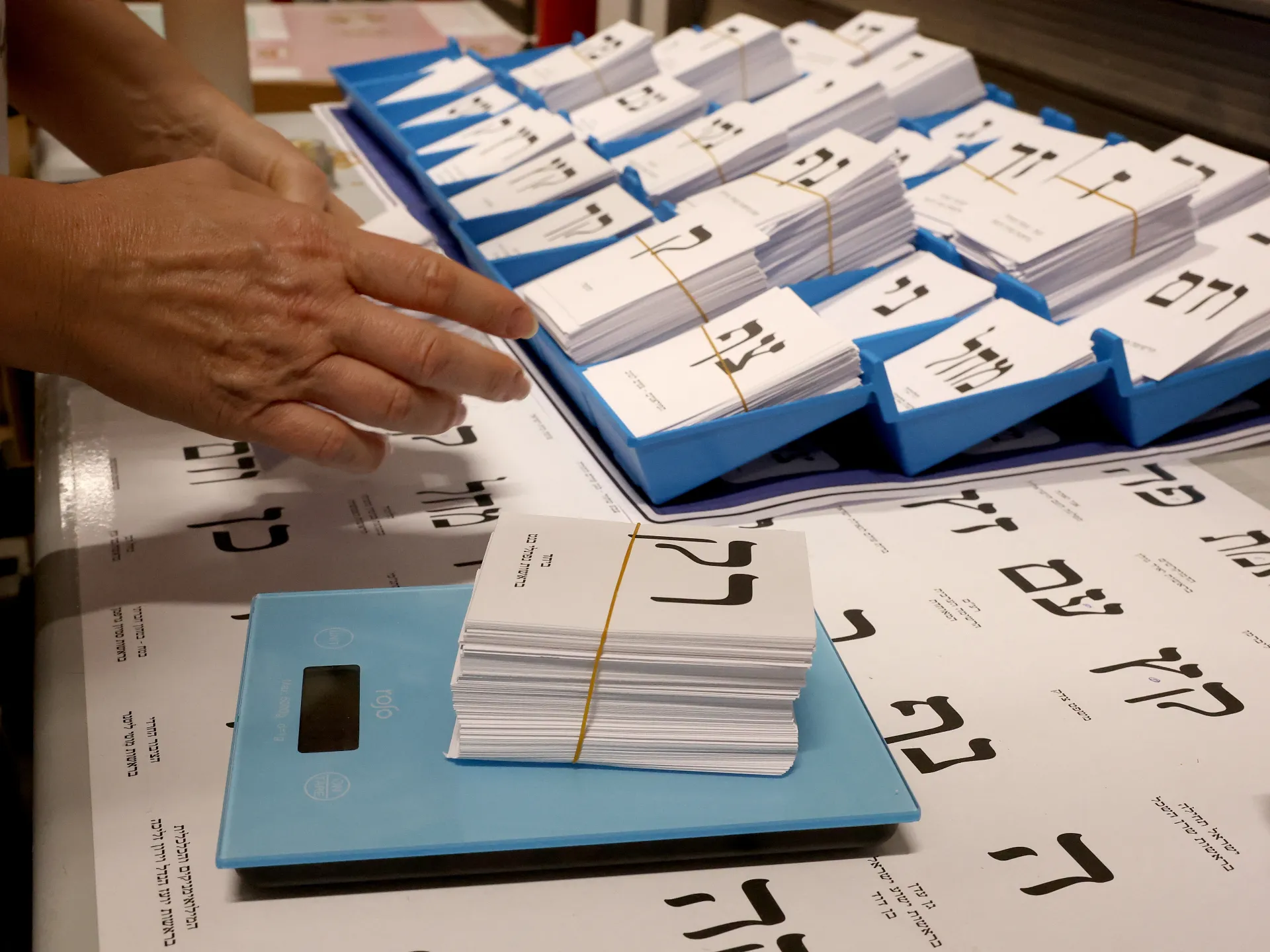
Israel will hold parliamentary elections on October 27, the first general vote since the start of military operations in Gaza and Lebanon and the first to arrive at the natural end of a full Knesset term in 38 years.
About 7.3 million Israeli citizens aged 18 and over are eligible to vote for the 120-seat parliament. Benjamin Netanyahu, Israel's longest-serving prime minister with 19 years in office, seeks re-election while standing trial on corruption charges he denies. His Likud party leads a far-right coalition that currently holds 60 seats.
The opposition bloc, comprising four major Jewish-led parties, holds 59 seats. Opinion polls show neither Netanyahu's coalition nor the opposition on track to win the outright majority of 61 seats required to form a government. Former army chief Gadi Eisenkot, leading the new Yashar party in the opposition alliance, is viewed as the most likely opposition candidate for prime minister.
Parties clearing the 3.25 percent electoral threshold enter parliament. Seats are allocated proportionally to each party's vote share. Any party failing that threshold loses its votes. No party has ever won an outright majority. After the election, parties have 28 days, extendable by 14, to assemble a coalition. If no coalition reaches 61 seats, Israel votes again.
The current coalition comprises Likud (32 seats), Shas (11), Religious Zionism (7), Otzma Yehudit (6), and New Hope (4), though Shas left in July 2025 and New Hope will merge into Likud. The opposition includes Together, led by former Prime Ministers Naftali Bennett and Yair Lapid; Yisrael Beiteinu under Avigdor Liberman; and the Democrats led by Yair Golan.
Arab-majority parties Ra'am and the Joint List could hold decisive power, but most Jewish-led opposition leaders have ruled out coalition partnerships with them. Israel's Central Elections Committee barred both in August, but the Supreme Court unanimously overturned the bans on October 2. Sami Abu Shehadeh, a Palestinian citizen of Israel leading Balad within the Joint List, withdrew after the court signalled support for his disqualification.
Roughly three million adult Palestinians in Gaza, the West Bank, and East Jerusalem have no vote in the government controlling their borders and legal status. Settlers in the occupied territories vote; Palestinians living nearby under the same military authority do not. Most Israeli citizens abroad cannot vote without a general absentee ballot system. Diplomats and state emissaries cast ballots at Israeli missions on October 20. Election day is a national holiday.