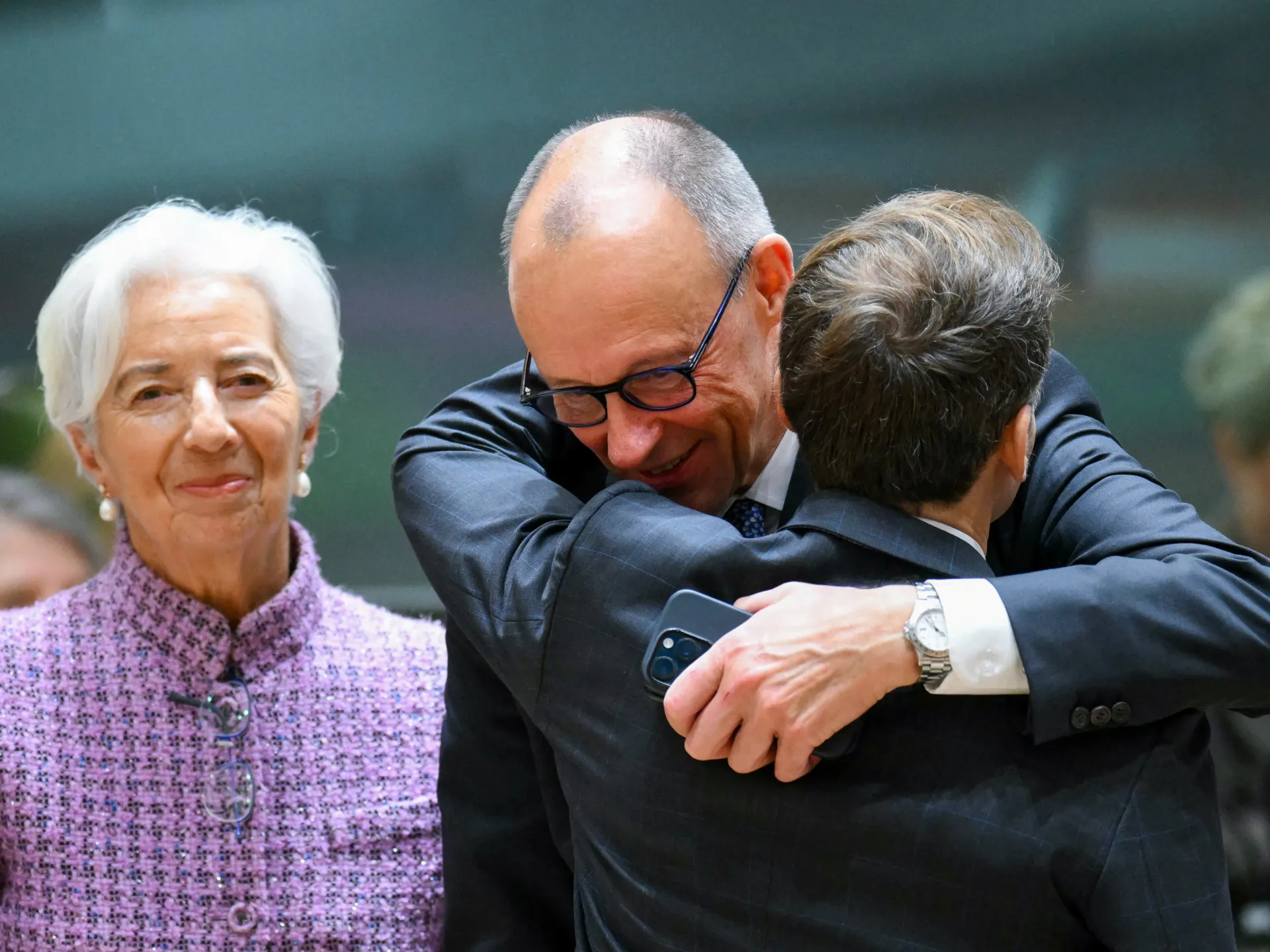
EU leaders failed to reach agreement on the bloc's budget proposal for 2028 to 2034 at an extraordinary summit in Brussels on Thursday, according to Al Jazeera. The proposal totals nearly $1.76 trillion. Leaders also struggled to agree on a new $49bn loan for Ukraine's economic and military needs next year.
Leaders disagreed on how much to spend. Some called for tighter budgets, while others defended traditional policies that take up large parts of the budget. Most wanted extra funds for new priorities and support for Ukraine almost five years into the war.
German Chancellor Friedrich Merz said Europe "needs solid finances" and "can't and mustn't take on more debt." He also said the bloc must fulfil a series of tasks reliably. He named a flourishing economy, a fully developed internal market and better defence as priorities.
Italian Prime Minister Giorgia Meloni said, "We're light-years away from a solution." She added that Italy is "not willing to sign off on a budget under which we would have to give more to receive less."
Hungarian Prime Minister Peter Magyar wrote on Facebook that "the chance of an agreement today is virtually zero," and that a deal before Christmas also seemed unlikely.
Dutch Prime Minister Rob Jetten said the budget "needs to be modernised and needs to be downsized" to reach a deal. He said he was ready for a long negotiation.
The budget requires unanimous approval from all 27 member states. Leaders want a deal by the end of the year, partly because elections in several member countries next year could complicate talks. European Council President Antonio Costa, who chaired the summit, called for an "open mind, a constructive approach and the sense of compromise."
The spending package sets aside $110bn for the Ukrainian government over seven years. Bulgaria, the Czech Republic, Hungary and Slovakia oppose using funds for military aid to Ukraine, according to the report. Merz earlier threatened to hold up a budget agreement unless all member countries made a "collective commitment" to Ukraine. He repeated that warning on Thursday.
Leaders must also decide whether the costs of servicing the new loan should come from the budget.