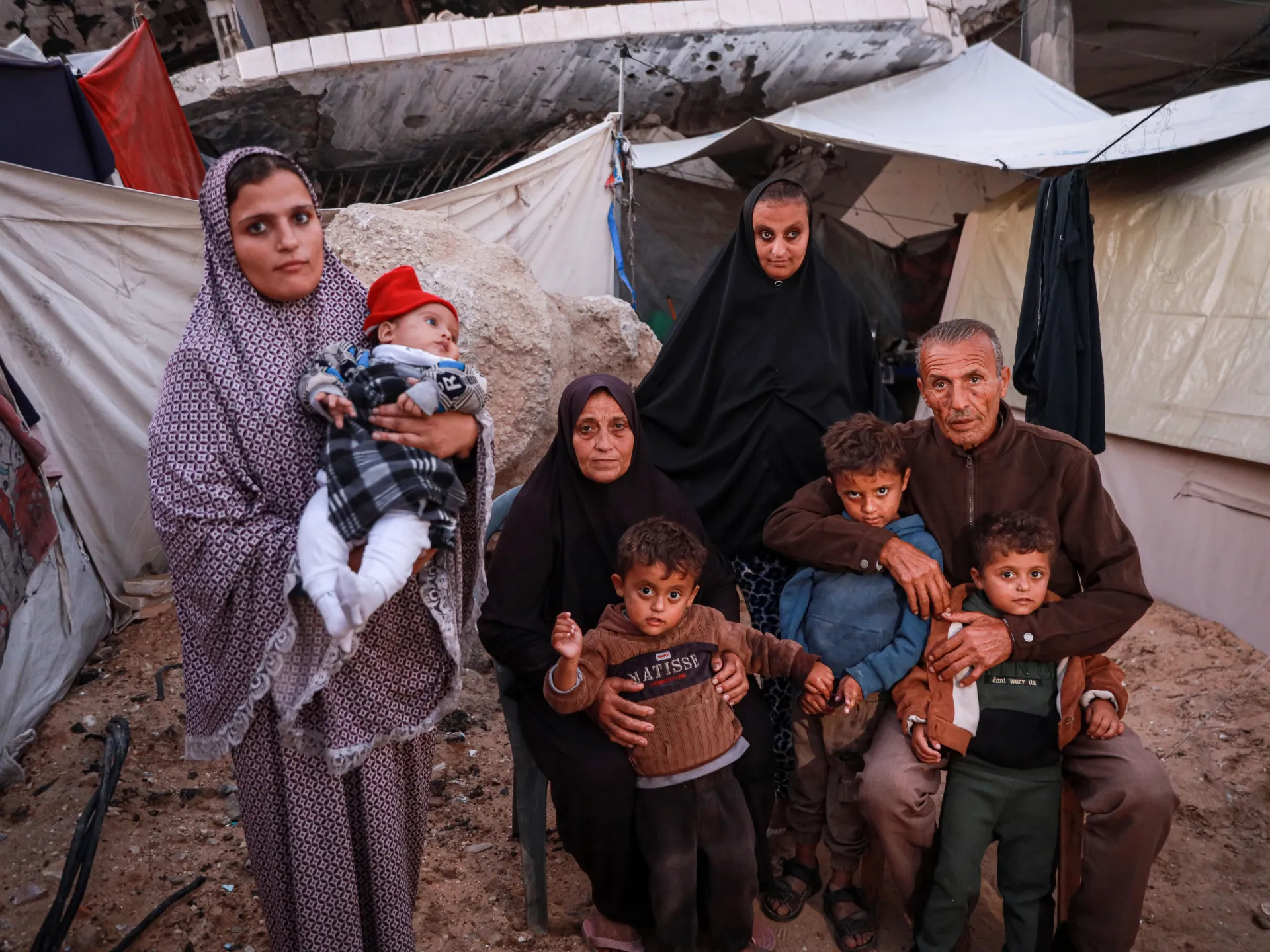
Families in Gaza City are struggling to keep children warm as winter arrives, according to an Al Jazeera report from Gaza City. The report describes flooded tents, high prices and a lack of winter clothing and blankets.
Amira Saad, 27, lives with 18 relatives, including nine children, under a tarp in a makeshift camp west of Gaza City. She says rain flooded their shelter while they slept, soaking their mattresses, pillows and blankets. Her four-month-old son, Mohammed, mostly wears thin summer clothes. She says the family cannot afford winter clothing.
Her mother-in-law, Basima Saad, 60, says her 23-year-old daughter, who has a disability, needs warm clothes and medication. "Her hands become as cold as ice," Basima says. "I dress her before I dress myself."
The report says a nine-month-old baby, Kinan Ahmed Raqiq, died of hypothermia on Thursday. His father told AFP that he found his son's skin had turned blue.
Amal al-Maydana, 46, is raising seven children alone. She says her husband was killed in January 2025 and her eldest son in November of the same year. She says her younger daughters still wear summer clothes. "Everything is expensive… children's clothes, shoes, everything," she says.
The report cites the UN Office for the Coordination of Humanitarian Affairs (OCHA), which says 94 percent of Gaza's population urgently needs shelter assistance and 65 percent of households live in tents or makeshift shelters. OCHA says 650,000 children need winter aid. By September, aid agencies had secured winter clothing for 9,000 households and bedding for 50,000, according to OCHA. OCHA said funding shortages were hampering winter preparations.
The UN Children's Fund (UNICEF) says at least 11 children died from hypothermia last winter, according to the Gaza Ministry of Health. UNICEF is seeking $97.5 million for its 2026-2027 winter response. UNICEF said on November 9 that flooding had affected more than 106,000 people.
In Gaza City's Rimal market, shop owner Mohammed Abu Shanar, 25, says many customers ask about winter clothing prices and leave without buying. He attributes high prices to shortages of goods entering Gaza, which he links to continued Israeli restrictions, and to wholesalers' prices. He says he has invested more than 20,000 shekels in winter stock.