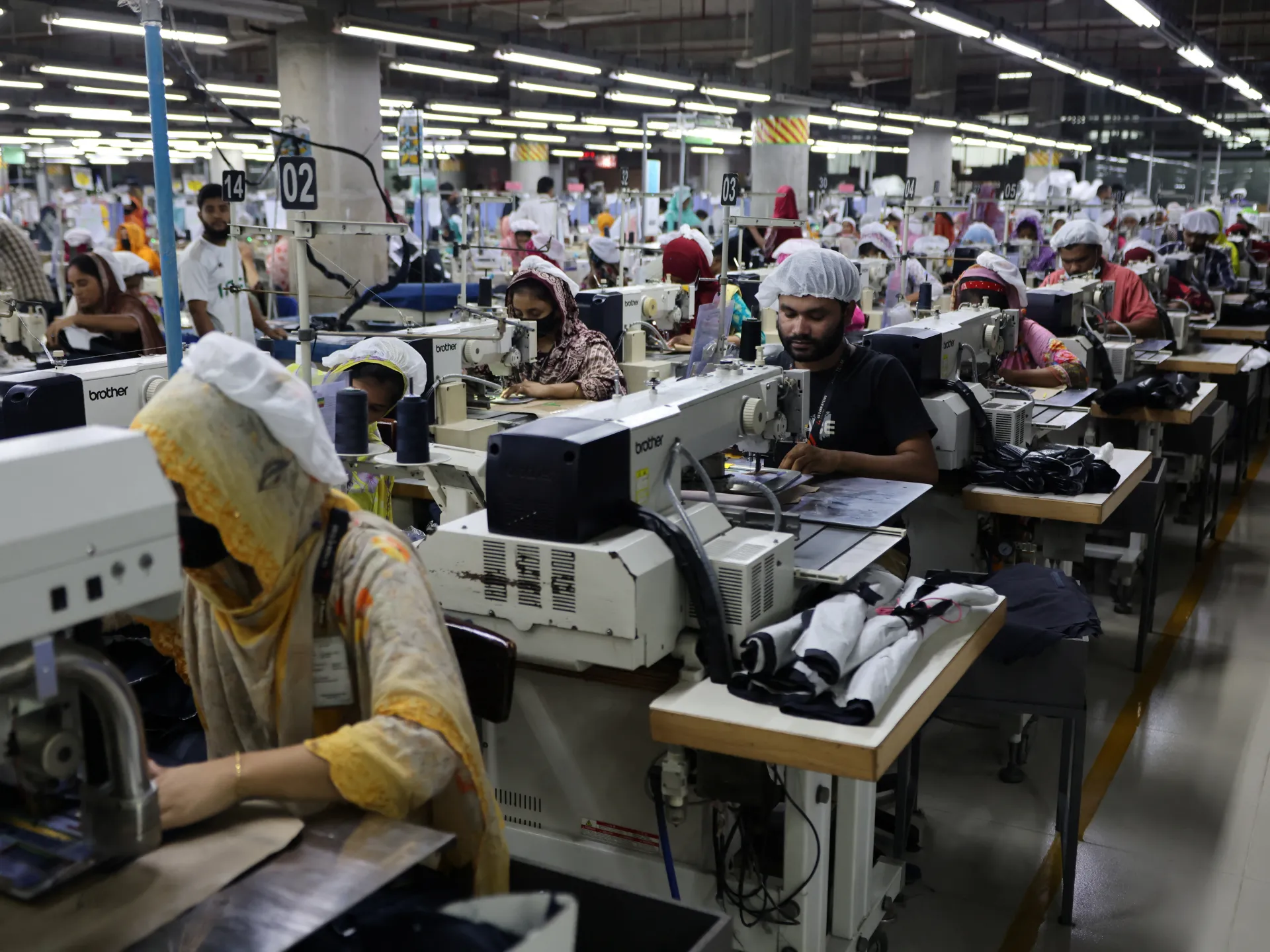
Garment workers in Bangladesh are protesting for higher minimum wages, saying their pay no longer covers basic living costs, according to a report by Al Jazeera.
Laili Begum, a 37-year-old sewing operator at Virtual Bottoms Limited, a ready-made garments factory near Dhaka, told Al Jazeera that she earns about 15,000 taka ($121) a month, or 18,000 to 20,000 taka ($145 to $161) with overtime. She said her two children dropped out of school earlier this year because she could not afford their education. "We can barely afford one proper meal a day," she said.
The protesters are demanding a minimum wage of 30,000 taka ($241). The current minimum wage is 12,500 taka ($102), last revised in December 2023. Official data cited in the report put annual inflation at 8.34 percent in September.
Demonstrations on Sunday disrupted operations at 529 factories and affected nearly a million workers, according to the Bangladesh Garment Manufacturers and Exporters Association. The report says police fired tear gas and stun grenades at protesters in the Jamgora part of the Ashulia industrial area and arrested dozens of people. On Monday, workers blocked the Dhaka-Tangail highway in Gazipur, and clashes with police were reported in the Mirpur district.
The government announced a six-member wage board on Sunday to review the demands. Labour Minister Ariful Haque Choudhury urged workers to resume work. Babul Akhter, a workers' representative on the board, called for new wages to take effect with January 2027 salaries and asked for the release of arrested workers.
Zahid Hussain, a former lead economist at the World Bank's Dhaka office, told Al Jazeera that persistent inflation has sharply eroded the purchasing power of low-paid workers.