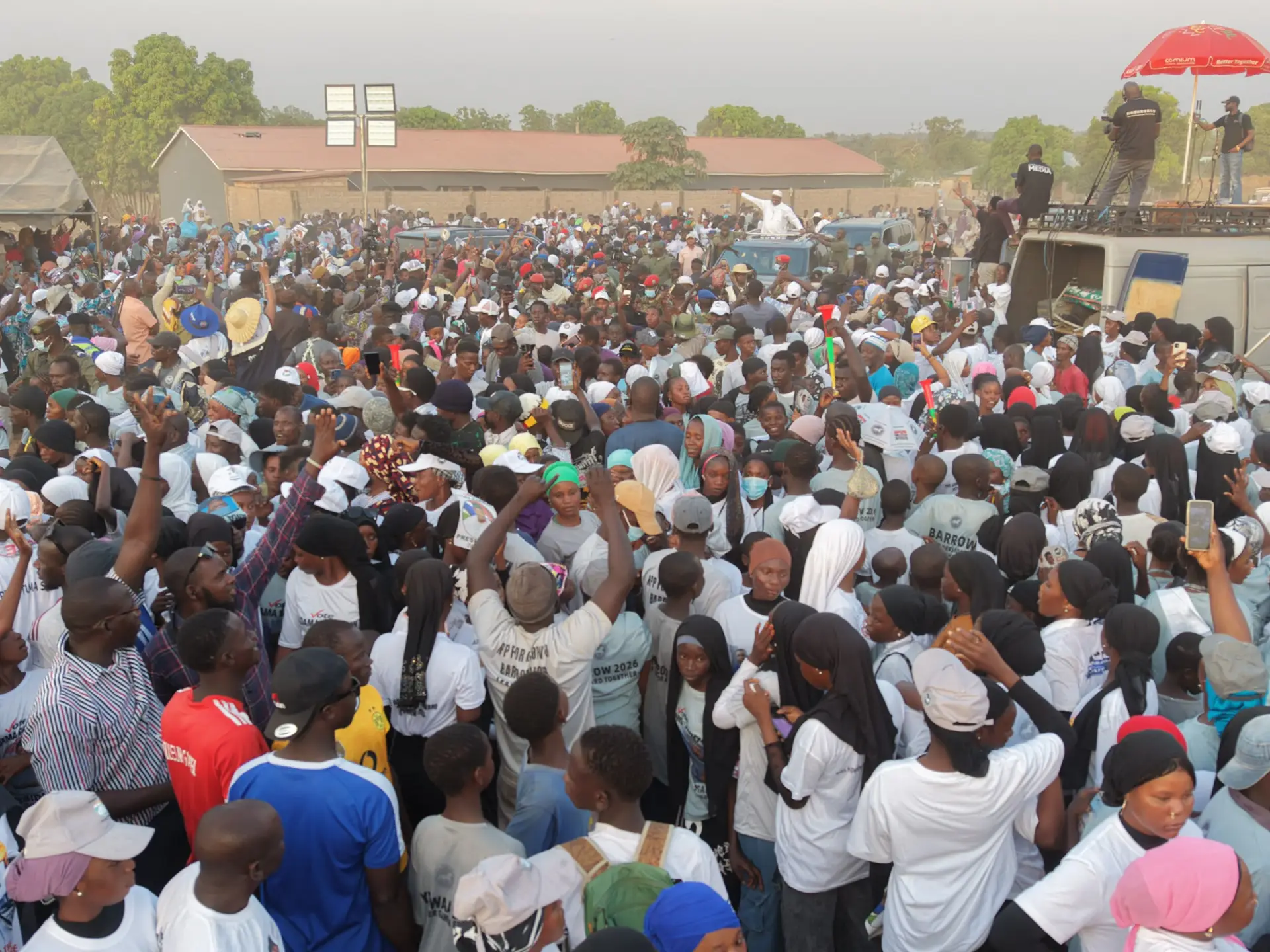
The Gambia holds a presidential election on December 5. Voters are weighing unemployment, rising living costs, unreliable electricity and delayed justice for abuses under Yahya Jammeh.
The Independent Electoral Commission lists eight candidates. President Adama Barrow is seeking a third term. He came to power in 2017 after defeating Jammeh, who ruled for 22 years.
Al Jazeera reports that Gambians see the vote as a test of whether the country's democratic transition can deliver. The 2025 Gambia Labour Force Survey puts overall unemployment at 8.3 percent, up from 7.6 percent in 2022–23. Unemployment among people aged 15 to 35 is 11.5 percent. The survey found that 41.3 percent of people in that age group were neither employed nor in education or training.
Sosseh Jagne, who runs Ya Anna's Catering, said power cuts between August and October sometimes lasted 19 hours or longer. She estimates spoiled food cost her more than 40,000 dalasis ($532). "Electricity is not a luxury; it is a necessity for people's everyday lives and, especially, for businesses that depend on it to operate," she told Al Jazeera.
Citing figures from the Gambia Bureau of Statistics, the report says 53.4 percent of the population lived below the national poverty line in 2020. The rate was about 76 percent in rural areas and 34 percent in urban areas.
Kebba Jome, national coordinator of the Gambia Centre for Victims of Human Rights Violations, said fewer than 25 percent of the 263 recommendations from the Truth, Reconciliation and Reparations Commission have been fully implemented. He said a special tribunal to prosecute alleged crimes under Jammeh is expected to begin hearings early next year.
Sainabou Camara Lowe, who was injured when security forces suppressed student protests in April 2000, said she received about 900,000 dalasis ($11,970) through the reparations process. "We are forgotten as victims and continue to wallow in pain and poverty," she told Al Jazeera.