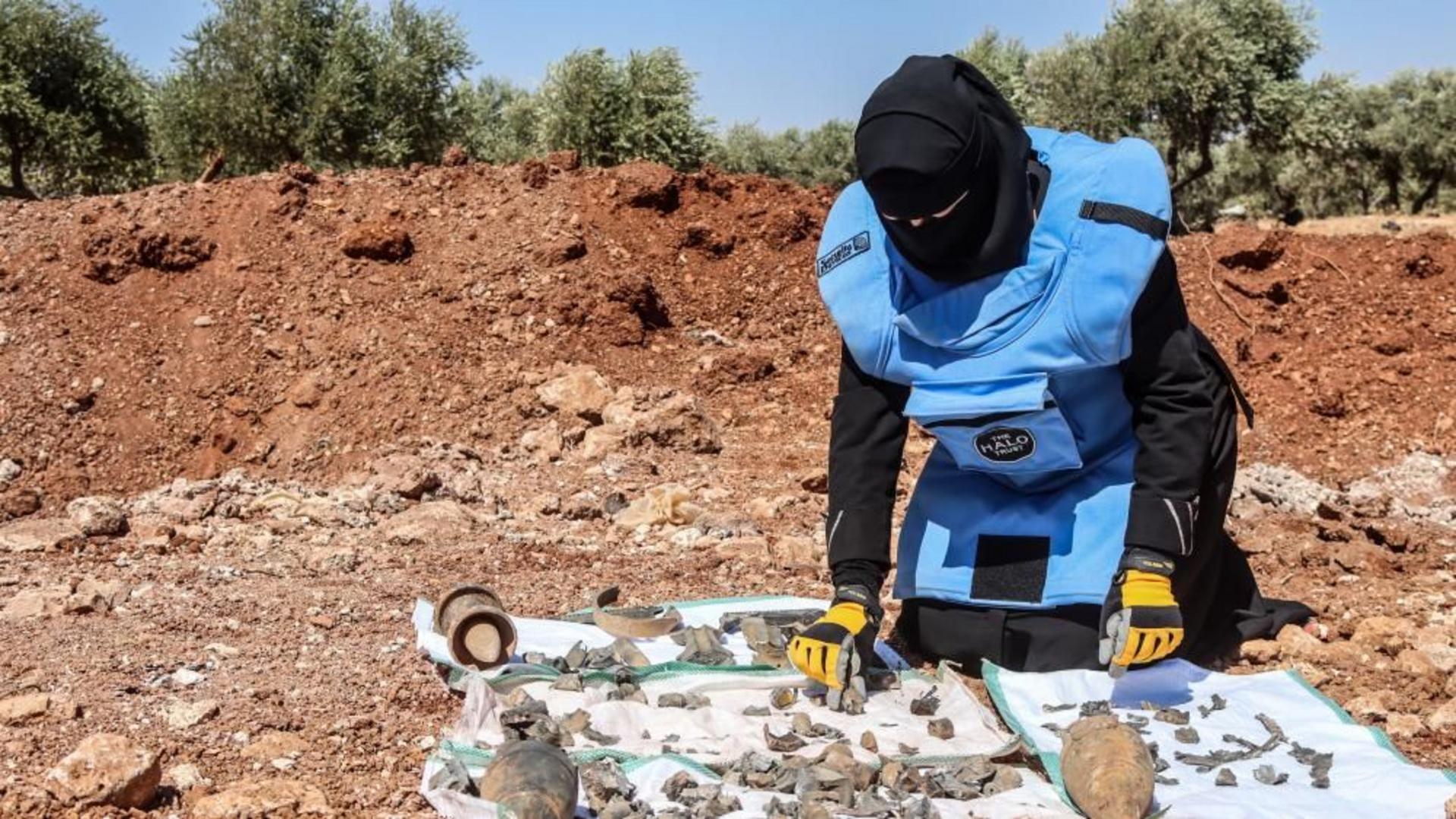
Landmines and other explosive remnants of war have caused a sharp rise in casualties in Syria, according to a Landmine Monitor report published by the International Campaign to Ban Landmines. The report says 1,602 people were killed or injured by landmines and explosive remnants of war in 2025, an increase of more than 50% on the previous year. Only Myanmar, with 1,891 casualties, recorded more.
The report attributes the rise partly to the large-scale return of refugees and internally displaced people following the overthrow of Bashar al-Assad. Katrin Atkins, research lead at Landmine Monitor, told the BBC that people who resettle in former conflict areas often start using fields again, and incidents increase a few months later.
The UN Mine Action Service (Unmas) has recorded at least 1,556 incidents involving explosive ordnance in Syria since Assad's fall on 8 December 2024. These caused 2,701 casualties, including 935 people killed and 1,766 injured. Children account for 995 of those victims, or about 37%. Experts estimate that casualties could be under-reported by 25 to 50%.
Eleven-year-old Alaa was killed on Sunday when she and her siblings triggered a landmine while tending goats in a field behind their home in Umm Khuzaym, north-west Syria. Her father, Walid Mohammed Al-Ghafar, told the BBC that demining teams had visited several times and that residents believed the fields were safe. Her 10-year-old brother, Mahmoud, was seriously injured.
Simon Jackson, Syria programme manager for the Halo Trust, said more than 60% of the casualties the charity recorded involve farming, agriculture or shepherding. He said people are taking risks "out of desperation."
The Syrian Ministry of Defence says its teams have found and dealt with more than 315,000 mines and unexploded munitions since the end of 2024. No nationwide survey has established how much land remains contaminated.