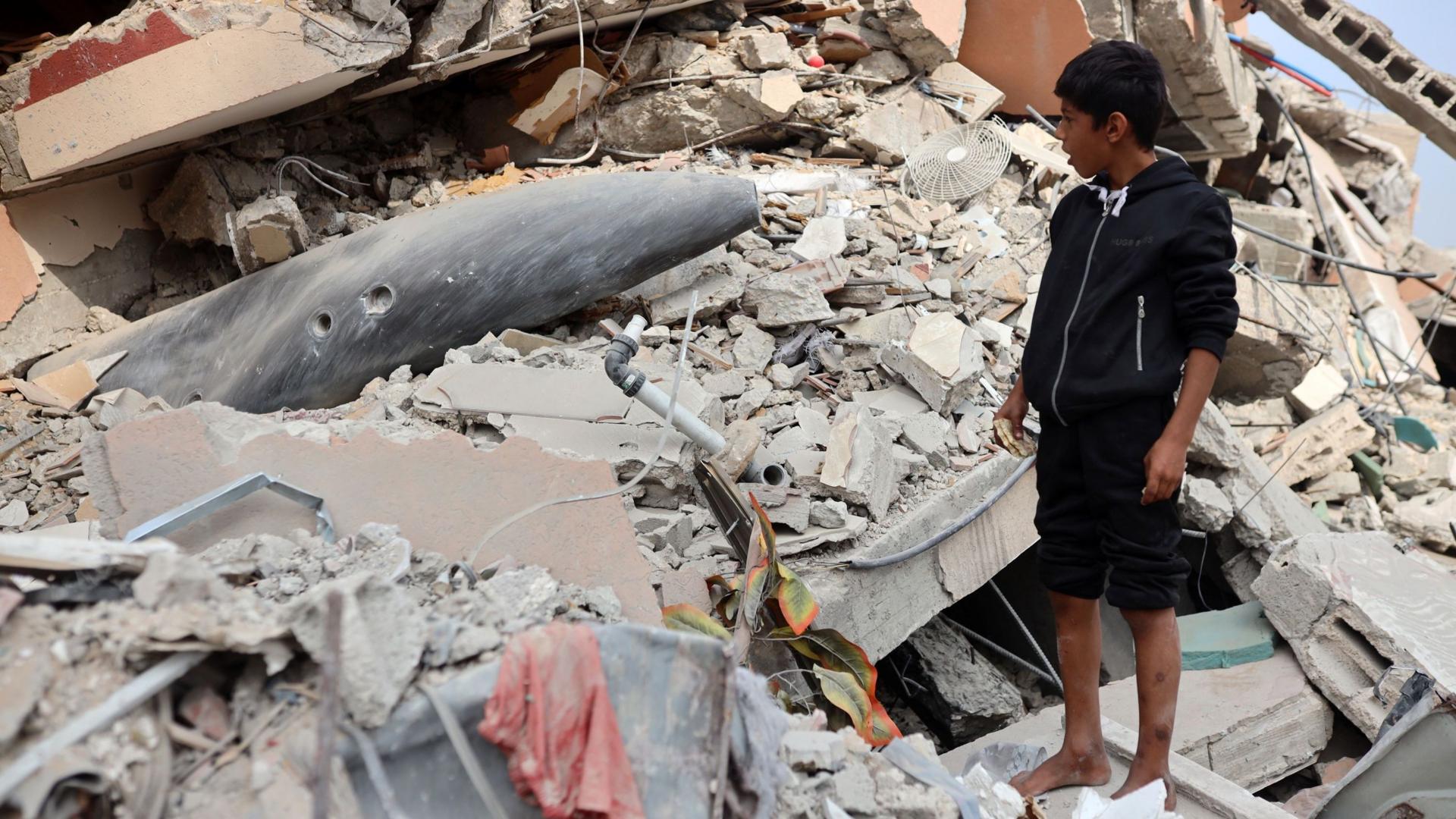
Oxfam says Israeli attacks have turned Gaza into "a toxic wasteland." A new report from the non-profit organisation says more than 99% of the Palestinian territory shows indicators of environmental contamination from Israeli military attacks.
The report, produced with the UK-based Conflict and Environment Observatory (CEOBS), used satellite imagery, remote sensing, spatial analysis and other open-source data. It identifies heavy metals, explosive residues, asbestos from destroyed buildings, and dioxins and biological contaminants in the air, soil and water supply. Oxfam says these threats could last for decades.
Oxfam International's executive director, Amitabh Behar, accuses Israel of "environmental war crimes" as part of an "ongoing genocide in Gaza." He says the destruction and contamination "will have fundamentally degraded the environmental conditions necessary for human safety and survival."
Report author Lama Abdul Samad told the BBC that Gazans are likely to face long-term health effects, including respiratory disease, cancers, organ damage, and a rise in birth defects and stillbirths.
The report cites a UN special rapporteur, who said in February that more than 200,000 tonnes of explosives were dropped on Gaza in almost two years. The UN Environment Programme estimated last year that military operations generated more than 61 million tonnes of debris, with about 15% potentially carrying a high risk of contamination from hazardous materials.
All six wastewater treatment plants in Gaza are out of operation, according to the report, and untreated sewage reaches groundwater and the Mediterranean Sea. Testing contamination is often not possible because laboratories have been destroyed and Israel restricts entry of specialist testing equipment and scientists. Oxfam calls for a full, independent environmental assessment before any clean-up.
Palestinian dermatologist Dr Alaa Abu Hajar told the BBC he had seen a five-fold increase in chronic skin diseases since the war began. He attributes this to pollution and overcrowded living conditions. Fisherman Abu al-Abed Sultan said rubble and sewage in the sea are harming fish and fishermen.
Israel's government has been asked to respond to the report. Israel has rejected genocide accusations in the International Court of Justice case as baseless and distorted, and says its campaign is self-defence against Hamas and that it takes steps to mitigate civilian harm. The BBC has approached the Israeli military for comment.