Iran's Revolutionary Guard Corps (IRGC) said it targeted radars at a US military base in Bahrain, as Tehran intensified attacks over the past week. The IRGC said it carried out a combined missile and drone operation against US positions at the al-Riffa and Awali bases, claiming it destroyed two US Patriot air defence radars. The IRGC described the operation as retaliation for a US strike on a radar installation on Iran's Hengam Island. The IRGC did not provide independent evidence for these claims in the report.
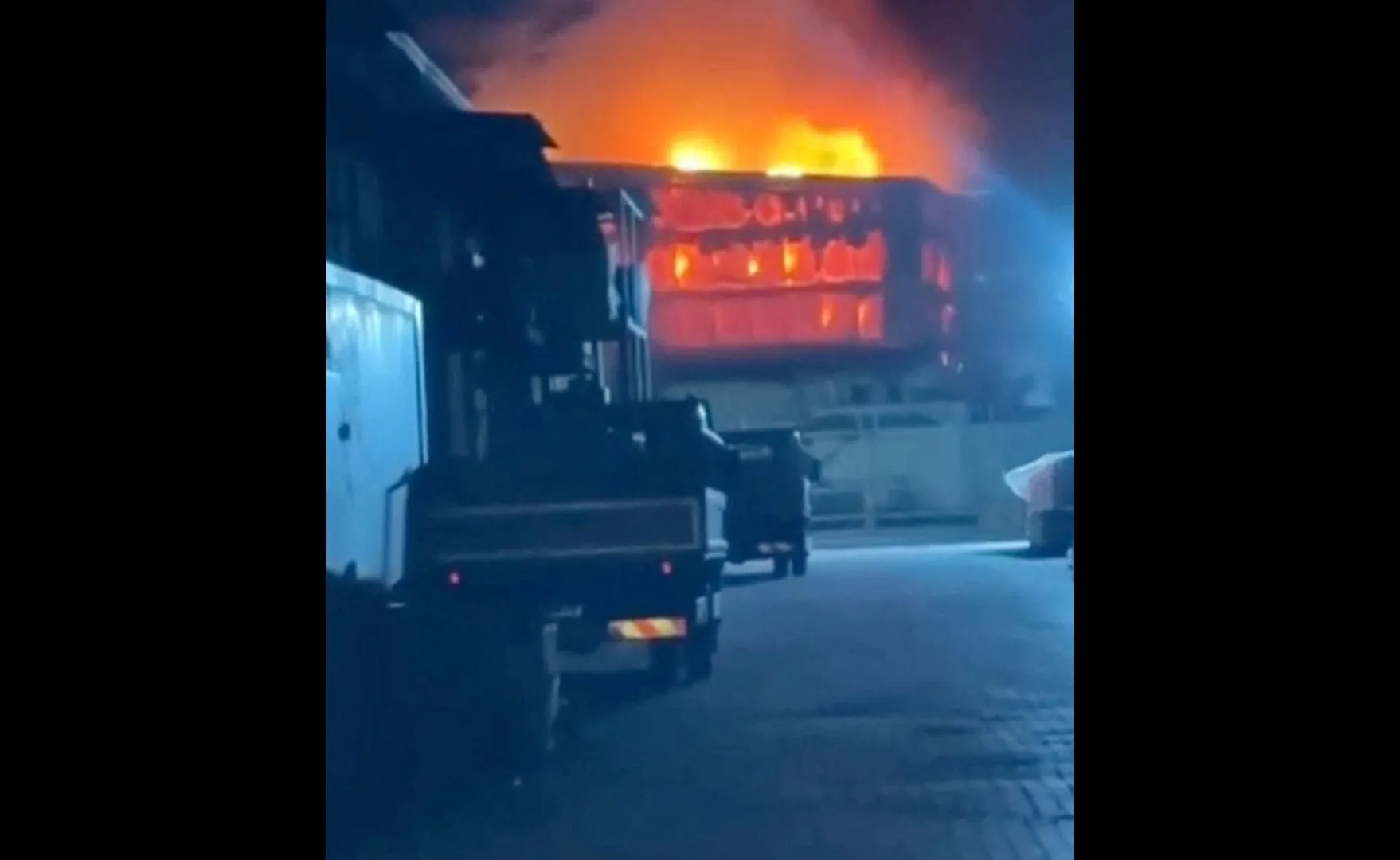
Bahrain's government said an Iranian strike hit a civilian industrial facility on Saturday, starting a fire, and that it thwarted several other attacks that day. Iranian state media reported that an interceptor missile launched from the US Fifth Fleet base in Bahrain crashed on Sitra Island near Manama, sparking a large fire.
Iran's army said its air defences fired a missile at a US F-16 jet over the Gulf, damaging the aircraft, according to the IRNA news agency. US Central Command (CENTCOM) denied the claim, saying "all US fighter jets in the Middle East are safe and accounted for." Iranian forces also said they shot down another MQ-1 drone east of the Strait of Hormuz. The IRGC claimed it was the 20th US drone of this type shot down since the war began in late February.
British maritime authorities reported two incidents in which tankers were struck by unidentified projectiles in the Strait of Hormuz near Oman. Al Jazeera correspondent Resul Serdar, reporting from Tehran, said about 25 tanker incidents have occurred since November 14. The UK Maritime Trade Operations (UKMTO) said 263 ships passed through the strait between November 12 and 18, 15 percent fewer than the previous week. Of those, 37 were oil tankers, down from 52. The UKMTO noted that shadow fleet vessels are not officially registered, so the figures could be higher.
Iran's Deputy Foreign Minister Kazem Gharibabadi told Iranian media that he considers the US economic blockade "a hostile act" and said Iran "will take any necessary measures to break this economic siege." Iranian President Masoud Pezeshkian described the situation as a "silent economic war" amid US sanctions and a naval blockade. The report says the US naval blockade, overland trade disruptions and new sanctions imposed in August as part of Operation Economic Outcast are hurting Iran's economy.
Rami Khouri, a public policy fellow at the American University of Beirut, told Al Jazeera that the attacks aim to reduce US military capabilities in the region and spread the costs of the war to the wider Gulf and global economies. He said Iran wants to show it cannot be attacked alone and may hope Arab governments will press US President Donald Trump to end the war. The report presents this as Khouri's analysis, not established fact.
The International Energy Agency said on Thursday that cumulative losses from the conflict have reached 2.8 billion barrels of oil and 60 billion cubic metres of gas from the Gulf. Oil prices crossed $100 a barrel before settling near $83. The report does not say whether talks between Tehran and Washington are planned.