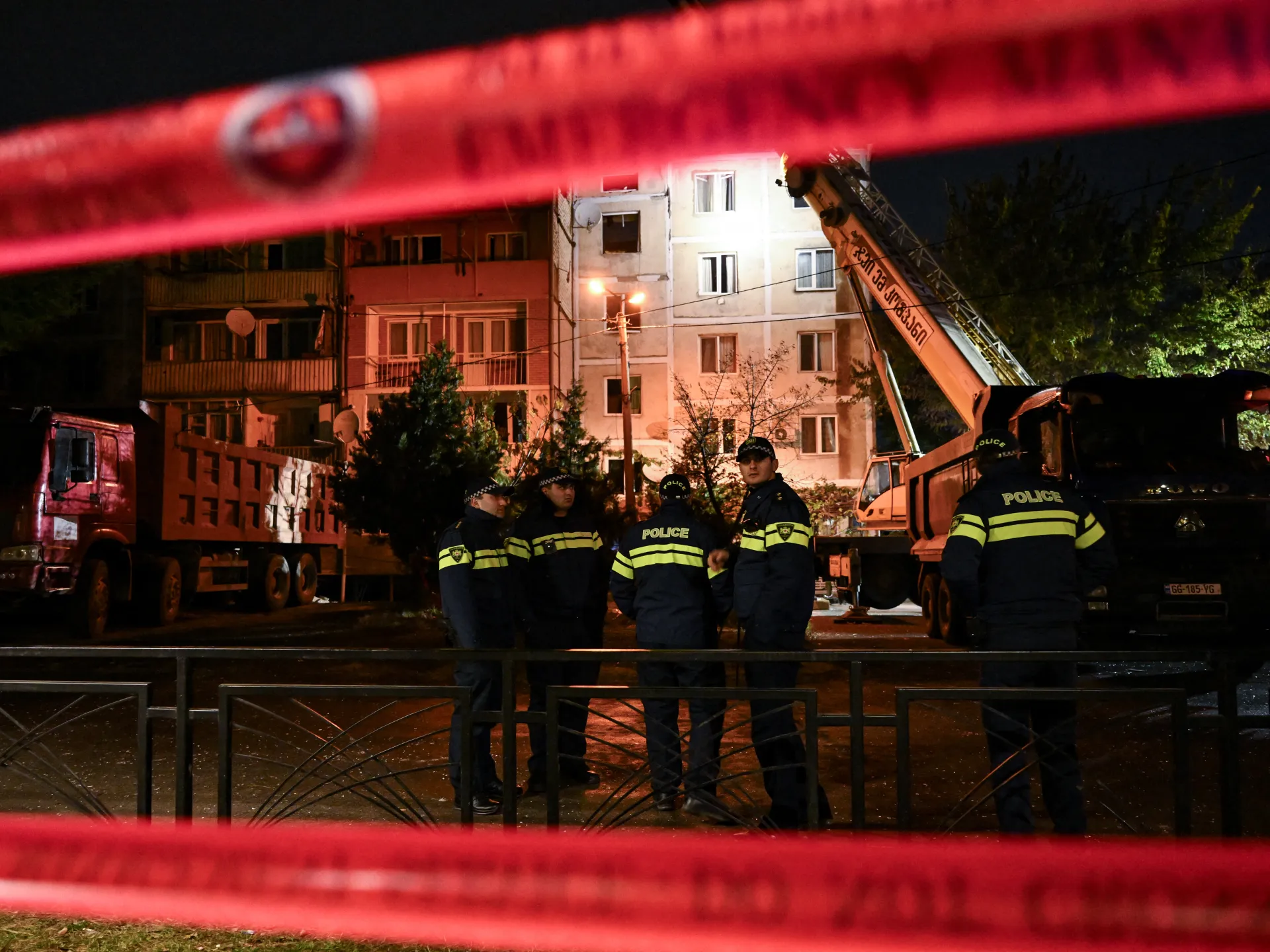
Six people, including a child, were killed when a suspected natural gas explosion brought part of a five-storey apartment building down in Ponichala, a suburb of Tbilisi, on Thursday morning. According to AFP, several residents were trapped beneath the rubble, and the scale of the loss is hard to read in any other way than as a failure of the systems meant to prevent exactly this kind of disaster.
The most troubling detail in this report is the contradiction at its centre. Interior Minister Sulkhan Tamazashvili said preliminary findings pointed to a resident switching on a gas heater on the fifth floor. Yet Tbilisi Energy, the gas supplier, said the apartment identified as the likely source had been registered as unoccupied and had recorded no gas consumption over the past year. Both claims cannot be left to stand side by side. Either the official account is incomplete, or the supplier's records do not reflect what was happening inside the building. Until inspectors can examine the damaged property, which the company says it has not yet been able to do, neither version deserves to be treated as settled.
Some things are not in dispute. A three-year-old girl was pulled alive from the wreckage after several hours of rescue work, and doctors at Ingorokva University Clinic reported she was stable with no serious traumatic injuries. An 11-year-old boy remains in intensive care, described as relatively stable. Mayor Kakha Kaladze said 28 families, comprising more than 100 residents, would be temporarily moved to hotels after structural assessments found two sections of the building unsafe. Those families now face displacement while the investigation proceeds, and their needs should be treated as urgent rather than administrative.
Prosecutor Levan Vepkhvadze has opened a criminal investigation into possible violations of safety regulations. That is the right step, but it should be understood as a test rather than a conclusion. The questions that matter are concrete: who was responsible for monitoring gas use in an apartment listed as empty, how the building's supply was inspected, and whether warnings about the structure or the gas lines were ignored. Those answers should be published in full, not released in fragments that leave the public to guess.
The lesson for Georgia, and for any city with ageing residential stock and informal gas use, is that safety depends on the unglamorous work of inspection, record-keeping and accountability. A rescue that drew applause from onlookers is a welcome moment, but it should not distract from the six people who did not survive. The investigation should be thorough, its findings should be public, and the families who lost homes should not be left waiting for answers.