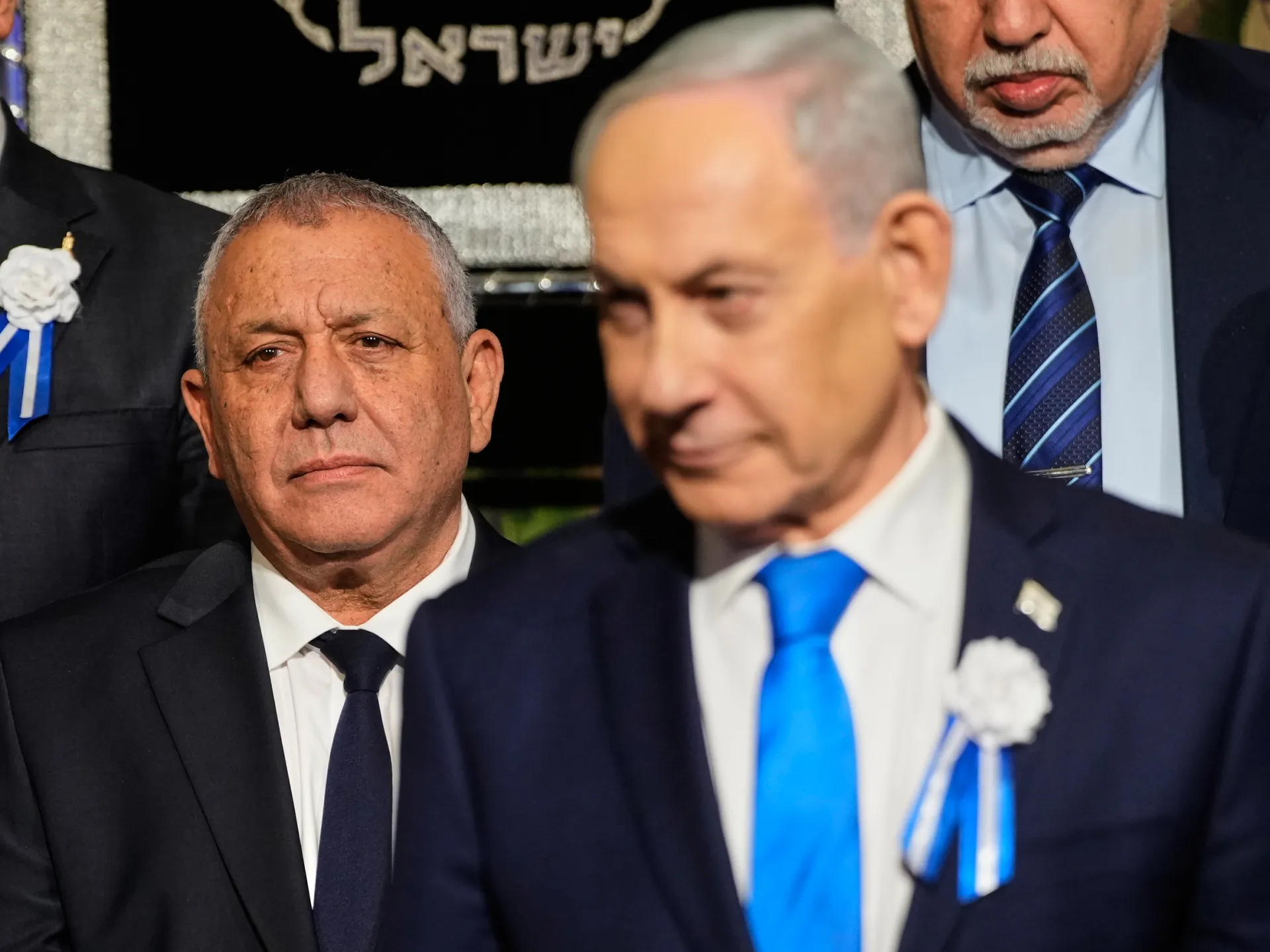
Israeli caretaker Prime Minister Benjamin Netanyahu renewed his call for a national unity government with his rival, Gadi Eisenkot, saying in a video statement on Saturday that only such a government can guarantee Israel's security. Netanyahu said a meeting with Eisenkot on Thursday "only strengthened the conviction that it is essential to form a national unity government." He said such a government could "eliminate the Iranian threat once and for all," claiming Tehran would "not hesitate to use nuclear weapons against us." He added: "Let's meet in one room, without preconditions."
Eisenkot dismissed the appeal within minutes. A former army chief, he said Netanyahu "knows he lost the election" and that "Netanyahu is calling for negotiations while they are already underway." He said: "These tricks don't work on me."
Neither side won a majority in the October 27 election. Netanyahu's right-wing and religious bloc took 53 seats in the 120-seat Knesset. Eisenkot's four-party bloc won 48 seats. Arab-led parties won a record 19.
President Isaac Herzog last week tasked Eisenkot with forming a government after 67 lawmakers, including those from Arab-led parties, endorsed him. Forty-six backed Netanyahu. Eisenkot has 28 days to form a government, with a possible 14-day extension, and has ruled out including Arab-led parties.
Under Eisenkot's plan for a minority "national emergency government," his bloc's 48 lawmakers would vote against the 46 Netanyahu supporters, while the 26 lawmakers from Arab and ultra-Orthodox parties could abstain. The report says this would let his government win approval without an absolute majority. Netanyahu has warned that such a government would lead to Israel's "collapse." His own proposed version would include centrist and right-wing Jewish parties and exclude Arab parties. The report says Netanyahu and his allies have made unsubstantiated claims that Arab-led parties "stole" the election. On Friday, Eisenkot called that campaign "racist."
Eisenkot has said he could work with members of Netanyahu's Likud party and with Bezalel Smotrich's Religious Zionism if their commitment to unity is "sincere," but he insisted on a "break with the extremists," notably supporters of far-right minister Itamar Ben-Gvir.
The Knesset will elect its speaker on Tuesday. The post is currently held by Netanyahu ally Amir Ohana. The opposition has put forward Matan Kahana, a former military officer, to replace him.