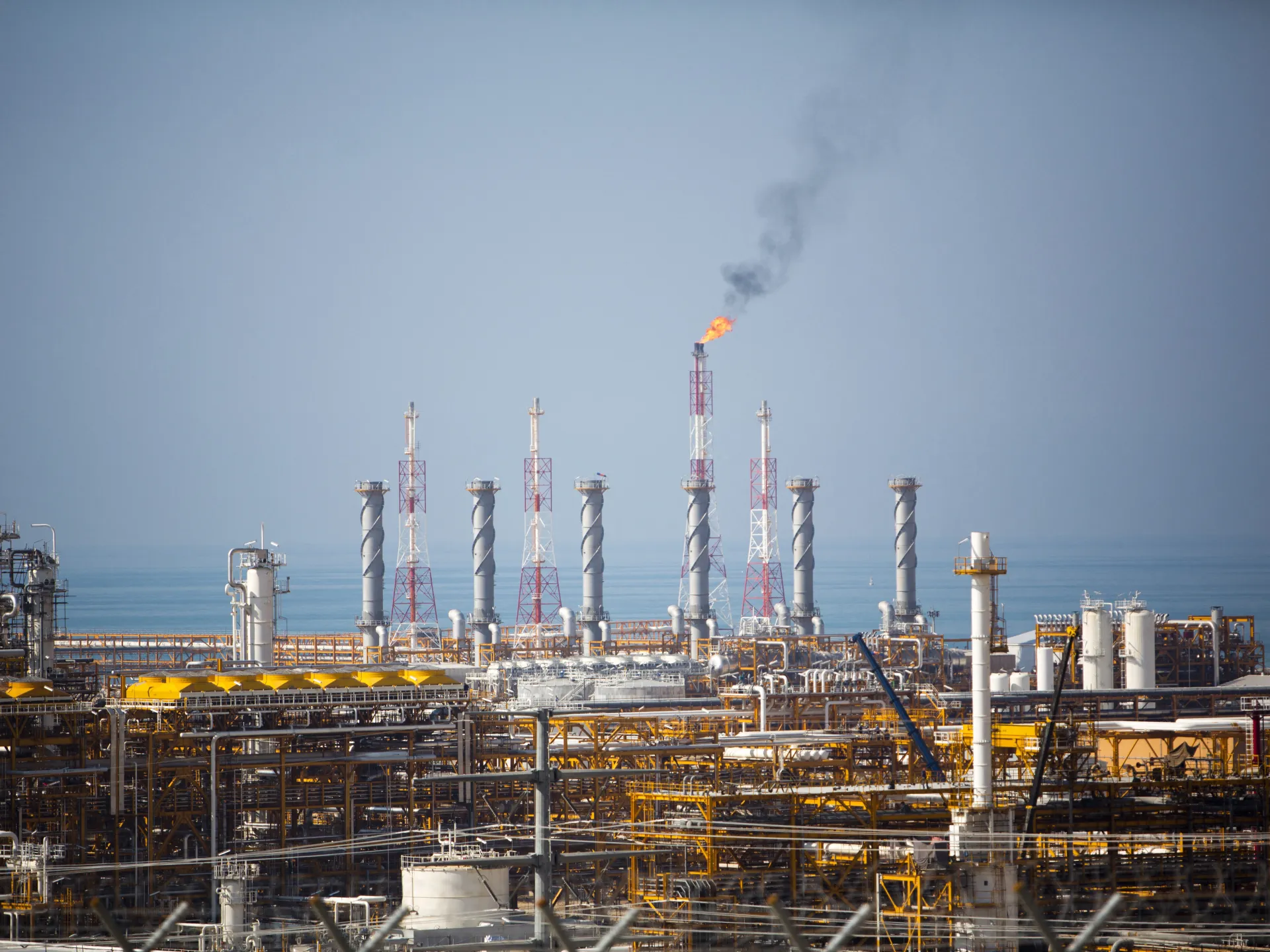
A fire on a gas platform in Phase 14 of the South Pars field, the world's largest offshore natural gas field, was extinguished quickly, according to the Pars Oil and Gas Company as reported by Fars news agency. That is the good news. The rest of the account raises harder questions about safety at one of the most strategically important energy sites in the region.
The most alarming detail is that 17 workers jumped into the sea to save their lives. Kourosh Dehghan, Bushehr Province's director general of crisis management, confirmed that rescue operations were underway and said details on the scale of the incident and the workers' condition would follow. Later, Bushehr's crisis management office said all 17 were in good condition after boarding lifeboats and rescue craft, with three heavy rescue vessels sent to bring them back. Those reassurances matter, but workers should never have been forced into the water to escape a platform fire.
Officials are considering a gas leak or an operational mishap as possible causes, according to Fars. Until an investigation identifies the cause, speculation about the incident's origin serves no one. What is clear is that a platform carrying gas operations was exposed to a fire serious enough to prompt evacuation into the sea. The public deserves a clear, timely account of what failed and what is being changed.
The report also places the incident in context. The platform accounts for only 14.5 million cubic metres of South Pars's total daily production of more than 700 million cubic metres. That scale may explain why officials describe the disruption as limited, but it does not diminish the risk to the people working there. A small share of output still represents a dangerous workplace, and the reservoir's importance means any operational weakness carries wider consequences.
Iran shares this reservoir with Qatar, which calls its portion the North Dome, and the field is estimated to hold 1,800 trillion cubic feet of usable gas, enough to supply the world's needs for 13 years. With that much at stake for both countries and for global energy markets, safety performance cannot be treated as a secondary concern. Authorities should publish the cause, the response timeline, and the findings of any review, and they should confirm that every worker is accounted for and treated. Seventeen people reaching the lifeboats is a near miss, and it should be treated as one.