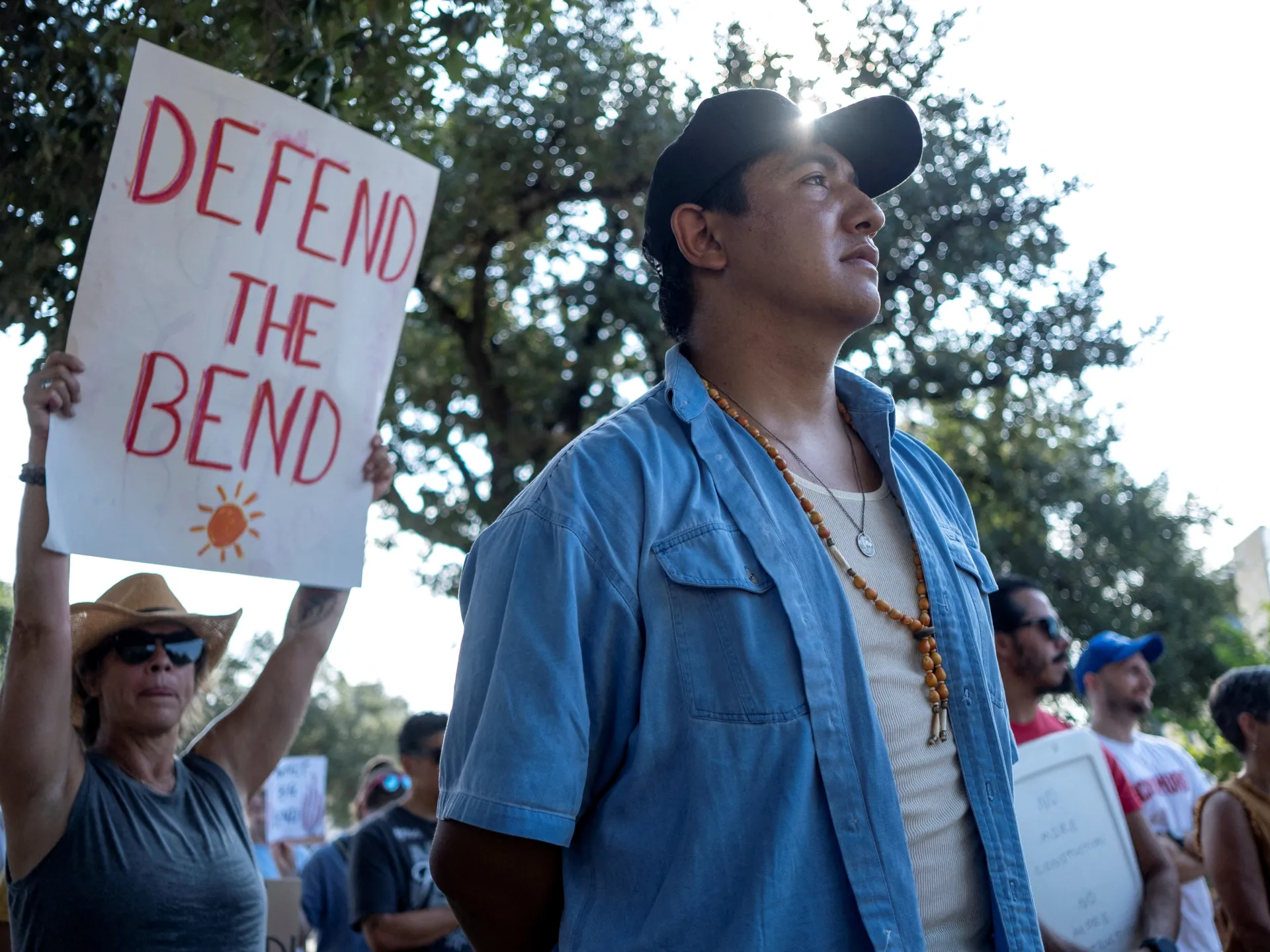
The US Supreme Court has allowed the Trump administration to build a border wall through a remote section of Big Bend National Park in West Texas. In a decision on Monday, the court granted the government's emergency request to lift a lower court's injunction that had paused construction while the case was litigated.
The court said the injunction "impedes the Government from advancing its 'compelling interests' in border security and integrity." It also said the government was "exceedingly likely to prevail" on its argument that US District Judge Kathleen Cardone lacked jurisdiction under the 1996 Illegal Immigration Reform and Immigrant Responsibility Act. That law limits lower courts' ability to rule on border barriers. The court found that the challengers' claim did not qualify, writing that "there is no such thing as a 'constitutional' major-questions claim."
Cardone had blocked construction in October. She noted that the Big Bend sector makes up more than 25 percent of the US-Mexico border but accounts for only 0.3 to 2.2 percent of migrant apprehensions. "Therefore, if the Big Bend Sector is an area of high illegal entry, so is every other sector, and the waiver authority would apply to the entire US-Mexico border," she wrote.
Justice Ketanji Brown Jackson was the only justice who indicated she would have denied the government's request. She did not explain her reasoning.
The Center for Biological Diversity, Friends of the Ruidosa Church and a local river guide and landowner sued the Department of Homeland Security. The lawsuit challenged waivers the agency used to fast-track border construction and sidestep environmental and conservation laws. Without those waivers, the plaintiffs said, construction would have to comply with the Endangered Species Act, the National Environmental Policy Act and the National Historic Preservation Act.
Opponents say the wall would disrupt a landscape that includes habitat for the endangered Mexican long-nosed bat. The Trump administration has described the Big Bend area as an artery for irregular border crossings and drug trafficking.