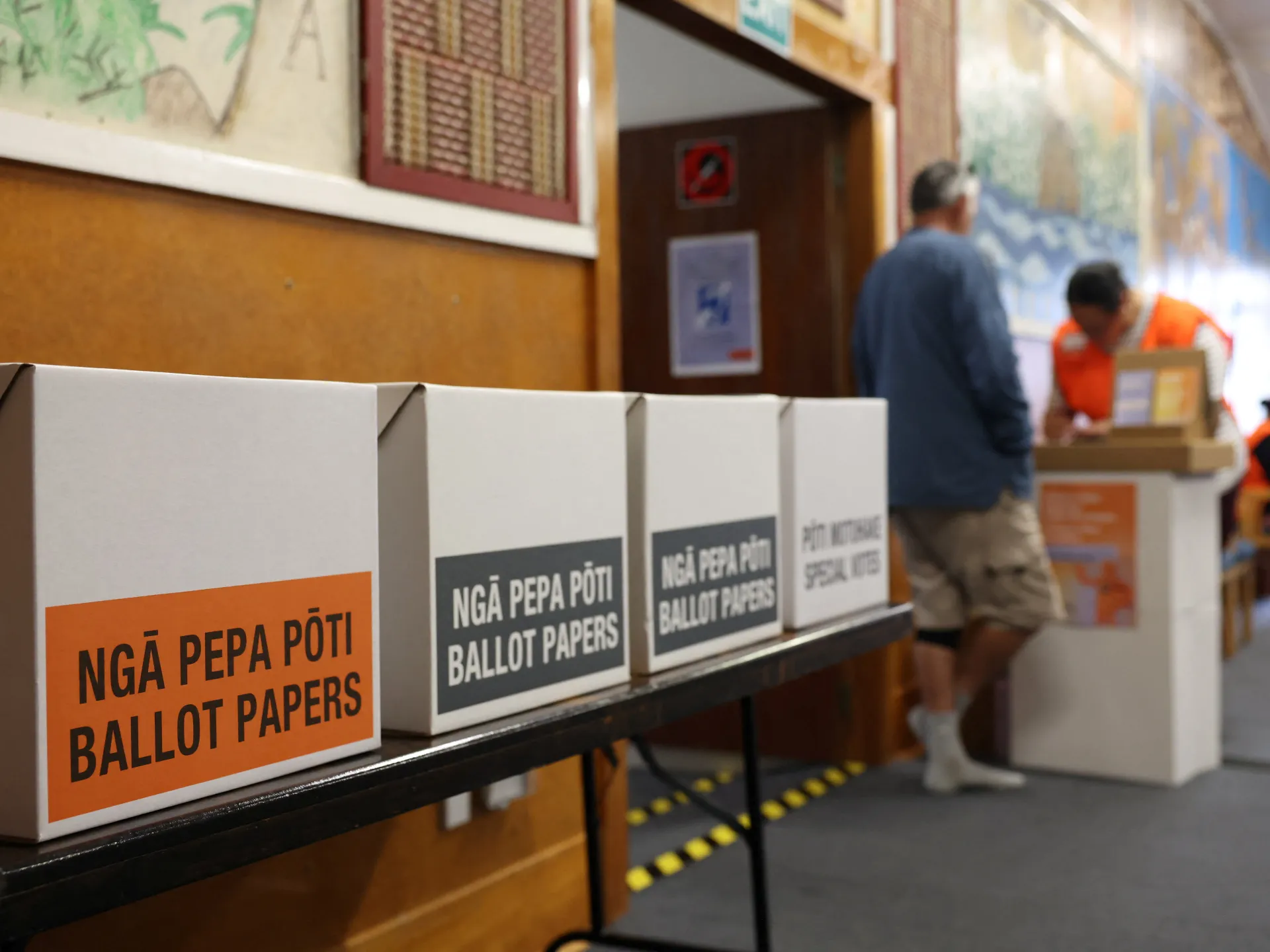
New Zealanders are voting on the final day of an election that polls describe as tightly contested. Polling stations opened at 9am on Saturday and close at 7pm, and more than 1.6 million of the nearly 3.8 million registered voters had already cast ballots by the end of Thursday, according to the Electoral Commission. Those figures show a public that is engaged, and a system that has made early voting easy.
The country's 19-hour election-day blackout deserves credit for what it tries to do. It bars political parties, news outlets and social media users from commenting on likely outcomes or campaign issues, and it covers billboards, bumper stickers, T-shirts and even profile pictures. Breaches can cost up to 20,000 New Zealand dollars, about $11,000. The rule aims to give voters a quiet final stretch in which to decide without being nudged at the last moment. In a digital age when every feed is a campaign, that goal is worth defending.
Yet a blackout cannot resolve the question the campaign has raised. Opinion polls show the governing centre-right National Party and the opposition centre-left Labour Party neck and neck, with neither on course to govern alone. Both are campaigning on the economy and on rising living costs, but their answers diverge sharply. National promises to return the budget to surplus through fiscal discipline while expanding the national pension scheme. Labour pledges cheaper healthcare and transport. Voters are being asked to choose between two very different theories of how to ease financial pressure, and the blackout does nothing to help them weigh those theories.
The mixed-member proportional system adds another layer. Voters choose a local electorate candidate and a party, and the outcome may hinge on a handful of seats either way. That design rewards broad representation, but it also means that a few thousand votes in the right places can decide who governs. Parties should be pressed, in the hours after the polls close, to explain how their economic promises would be paid for, rather than to offer slogans that sound good on a billboard that will soon be removed.
The Electoral Commission aims to release preliminary results from 95 percent of polling stations by the end of election night, with a final result expected by November 27 once overseas ballots are counted. New Zealanders should use the wait to read the actual costings of each party's plan, not the headlines about them. The blackout ends at 7pm. The harder work of holding leaders to their promises begins the moment the results are published.