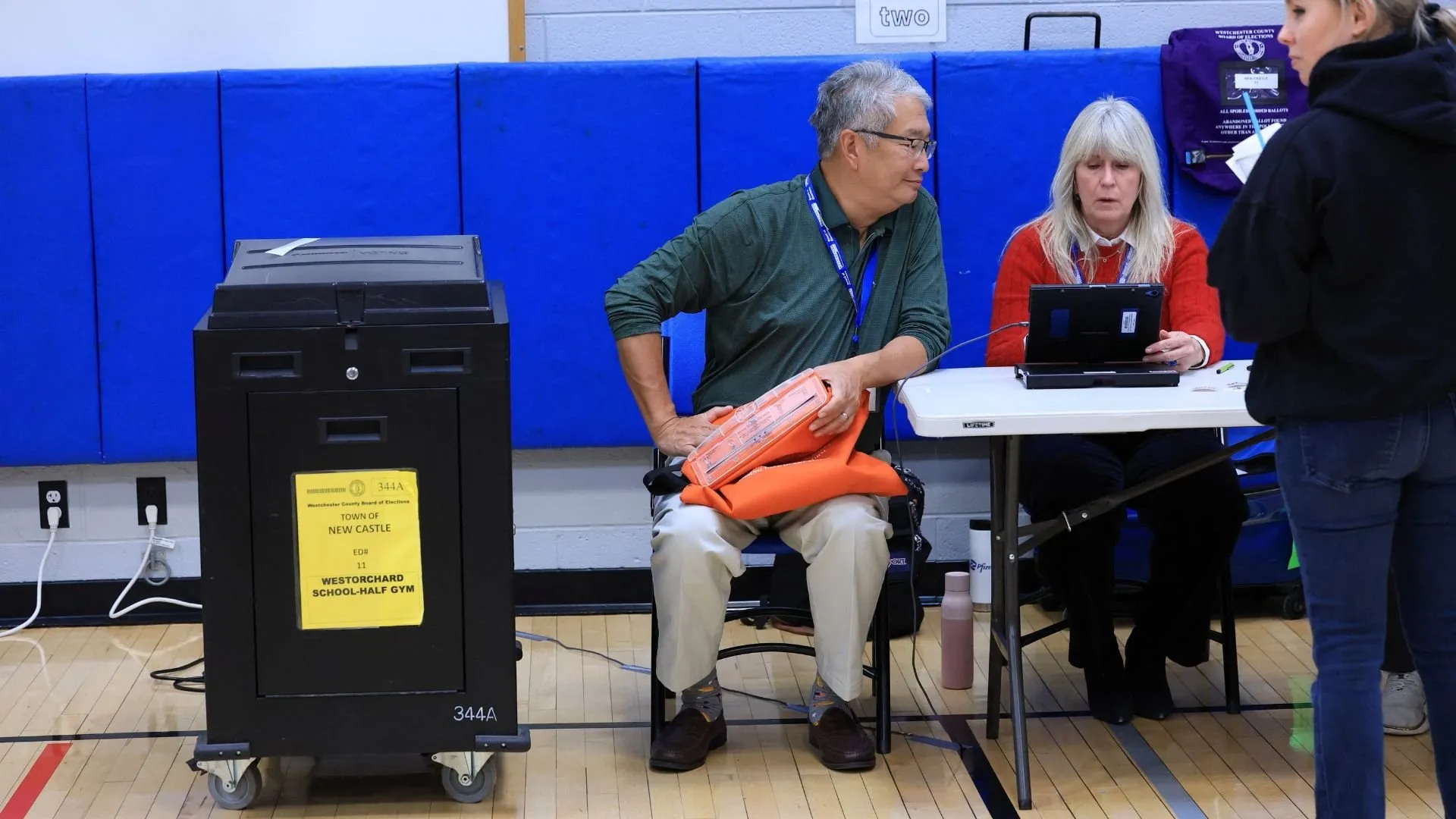
Across several states, polling stations hit technical problems on the same day, and the response from officials has been to extend voting hours. In Westchester County, New York, machines meant to read physical ballots struggled because the paper was too thick. In Broward County, Florida, voting was delayed for 20 minutes when a new safety feature malfunctioned. In North Carolina, the Board of Elections is considering extending voting by an hour in seven counties after what were described as widespread technical issues. In Arizona's Maricopa County, a polling station at a school was temporarily closed after a power outage, and in several Pennsylvania counties voting was extended by half an hour because of what officials called machine setup issues.
Officials describe these problems as minor, and in the narrow sense they may be right. Ballots in Westchester are reportedly being collected to be counted manually later, and that is a sensible fallback. But a problem that is minor for the machine can still be major for a voter who arrived after work, waited in line, and was told to come back later or simply stayed longer in the dark. Every extension of polling hours is an admission that the system did not work as planned on the day it was most needed.
The reporting also shows why trust matters as much as technical performance. Al Jazeera's Kristen Saloomey, reporting from Tarrytown, New York, said officials were reassuring voters that the ballots would be counted by hand. County officials said the ballots would be taken to the Board of Elections under police escort and counted with attorneys and representatives from all parties present, in order to prevent the spread of any conspiracy theories. That is the right instinct. Transparency is the best answer to suspicion, and the presence of observers from every party is what turns a malfunction into a documented, checkable process.
Officials should now publish clear, county-by-county accounts of what failed, how long each delay lasted, and how the affected ballots were secured and counted. They should also review whether the machines and their setup procedures can be tested before election day rather than discovered during it. The companies that supply voting equipment, including Liberty Vote, formerly Dominion, should expect close scrutiny of their products, and the reasons for that scrutiny go beyond any single politician's claims.
Nothing reported here proves that the midterm results are unreliable. What the reports do show is that the margin for error in running elections is thin, and that voters notice when the machinery falters. The next step is not to dismiss the problems as minor but to fix them before the next vote.