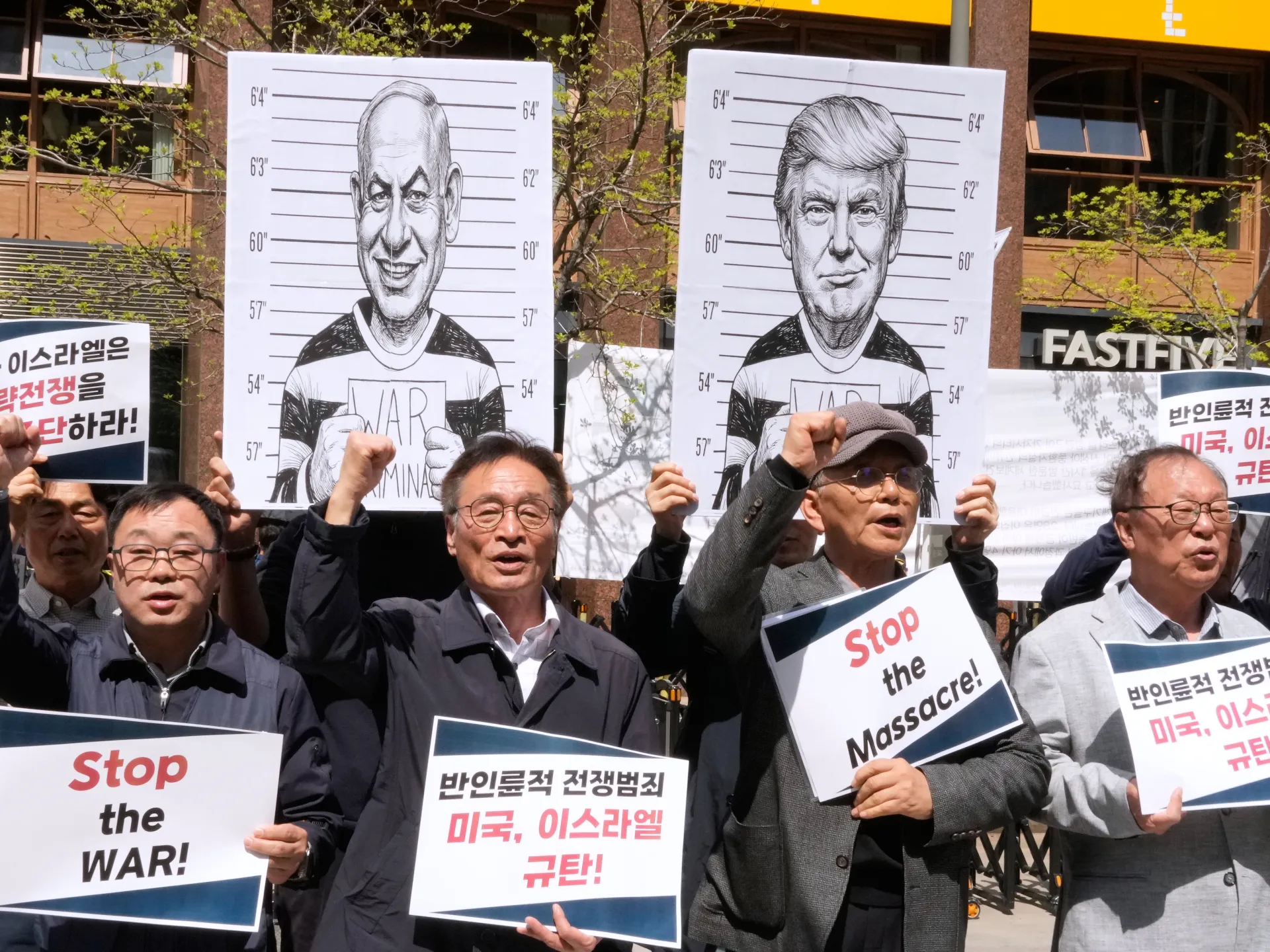
Analysts say governments and businesses across the Asia-Pacific want "enormous changes" in US foreign policy during the rest of President Donald Trump's term, covering the war on Iran and his trade and tariff policies. Few expect those changes to happen, even if Democrats win control of the House of Representatives and possibly the Senate in Tuesday's midterm elections.
Steven Okun, chief executive of APAC Advisors, a Singapore-based consulting firm, said everybody in the region is watching. "It's great political theatre," he said.
The report says the Asia-Pacific has been hit harder by the Iran war than any region outside the Middle East. Before the conflict began in January, the region received most of the Gulf oil and gas that passed through the Strait of Hormuz. After Iran closed the strait in response to US and Israeli strikes, much of the region faced shortages. The Philippines, which relies on the Gulf for more than 90 percent of its crude oil imports, has been under a national energy emergency since March.
The Institute of Southeast Asian Studies (ISEAS)-Yusof Ishak Institute in Singapore said soaring fuel costs have drained foreign exchange reserves in Cambodia, Laos, Myanmar and East Timor. It said Indonesia, Malaysia, Thailand and Vietnam have also spent heavily on fuel subsidies.
Okun said a Democratic-controlled Congress is unlikely to force Trump to end the war. He said it would likely bring investigations and oversight hearings. The report notes that Congress can formally declare war, but Trump has said the strikes on Iran were in self-defence and has ignored congressional resolutions directing him to withdraw forces. He could veto restrictive legislation, and overriding a veto requires a two-thirds majority in both chambers.
On trade, the report says Trump imposed "reciprocal" tariffs of 10 to 50 percent on about 90 countries last year. Asian countries faced some of the highest rates, including 49 percent on Cambodia and 46 percent on Vietnam. After the Supreme Court struck down those tariffs in February, the administration imposed new tariffs of 10 and 12.5 percent in July on goods from 60 trading partners, accusing them of failing to stop imports made with forced labour. Asian countries on that list include China, Japan, South Korea, Cambodia, Indonesia, Malaysia, the Philippines, Singapore, Thailand and Vietnam.
Okun said Congress cannot change trade policy in a way that matters to the region. "Tariffs don't change. The war doesn't change," he said.
Stephen Olson, a visiting fellow at the ISEAS-Yusof Ishak Institute, wrote in a recent essay that a strong rejection of "Trumpism" at the polls could embolden pro-free-trade Republicans. He said a Democratic Congress could push for carve-outs and exceptions that would give regional exporters "a modicum of relief."
Joshua Kurlantzick, a senior fellow at the Council on Foreign Relations, said the region also wants changes on security. "I think nearly all of Asia would like to see enormous changes, across many domains, during the rest of Trump's term," he told Al Jazeera. "But I think much of the region believes this will not happen."
Okun said the new Congress, whichever party controls it, will likely pass tougher restrictions on China, including the Remote Access Security Act and the Chip Security Act, which the report describes only in part.