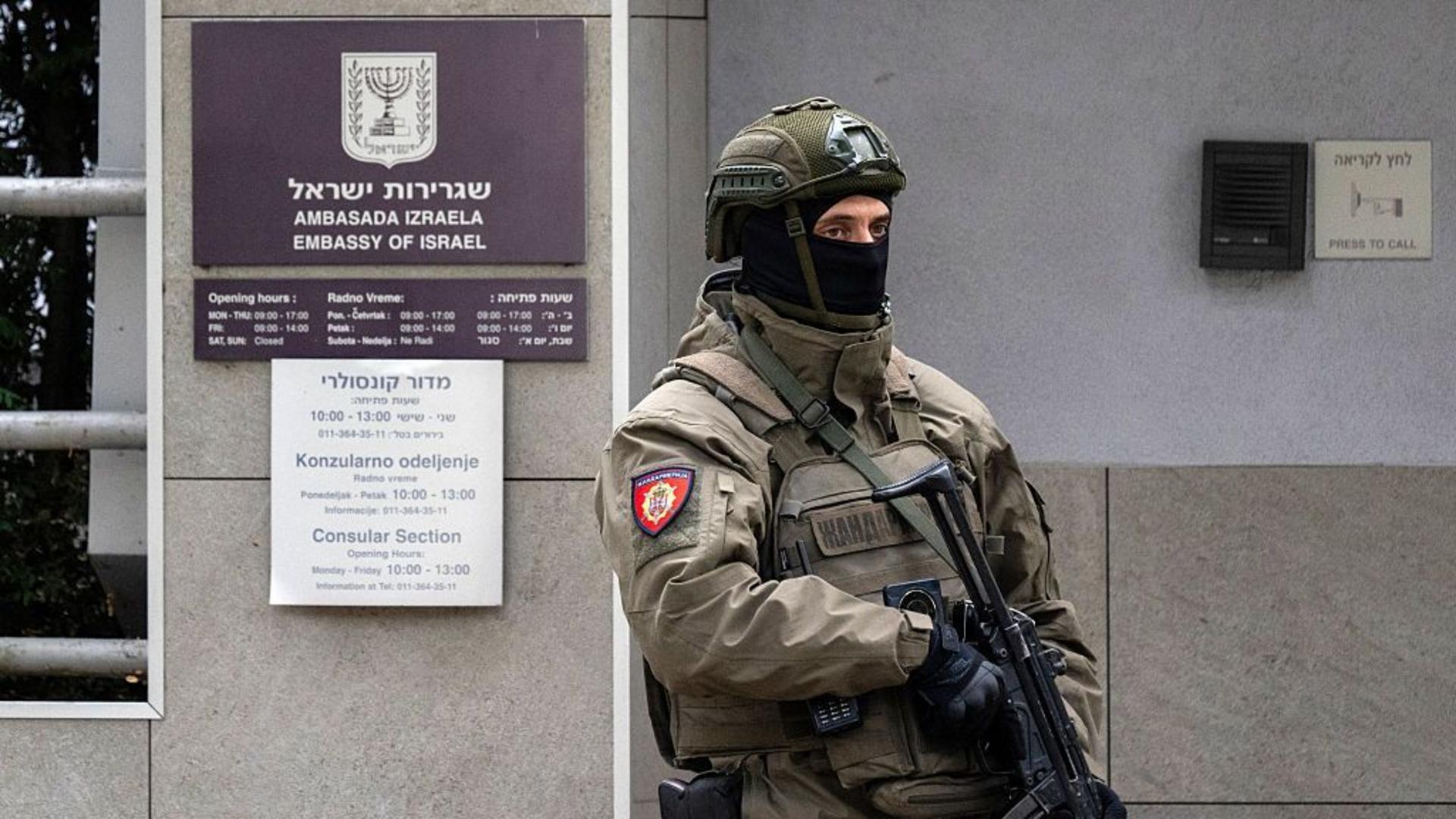
Serbian police shot dead a young man outside the Israeli embassy in Belgrade in the early hours of Wednesday after what authorities called a "terrorist attack". The country's interior minister, Ivica Dacic, said the attacker rushed at a police officer with two knives while shouting "Allahu Akbar". The officer suffered a minor knife wound to the face and shot the attacker. Dacic described the assailant as a minor and Serbian citizen who was being monitored by security services as "known to be a supporter of the Islamic State".
The official account raises more questions than it answers. Dacic said the suspect has not been identified, and an investigation is ongoing. Security services said the suspect had posted a picture of the Islamic State flag on Instagram. That is a warning sign, and it is exactly the kind of signal that should have prompted closer scrutiny long before a knife reached an officer's face. The report does not say whether the monitoring was active on the day of the attack or what it had produced.
Dacic has raised the terrorism threat level to "red alert", the highest level, which brings stricter checks and more police at infrastructure and crowded places. Heightened vigilance is reasonable after a violent attack. But a red alert is a response, not a strategy. Belgrade has now seen two attacks on the Israeli embassy in less than three years. In June 2024, a man shot a police officer in the neck with a crossbow. The repetition should force a harder question about why the same target keeps drawing violence and whether protection has been tailored to that reality.
The fact that the attack came one day after elections in Israel does not, on its own, establish a motive, and officials should avoid treating it as one until the investigation says so. It is still a reason for the authorities to explain openly what they know about the suspect's contacts and intentions. Serbia's government owes the public a clear timeline, a plain statement of what monitoring existed, and an honest account of any gaps.
The officer who was hurt is reportedly doing well, and Dacic visited him. That matters, and the courage of officers who stood between a knife and a crowd should be acknowledged. Yet gratitude to the police cannot substitute for accountability. The next step should be a transparent investigation, a review of how a monitored minor reached the embassy with weapons, and published findings. Anything less leaves the threat and the questions in place.